
Flat Fee vs. Per Square Footage for Full-Design Service
Feb 06, 2026Why I’m Sharing My Actual Proposal (Screenshots Included)
This week, one of my closest friends reached out to me.
She’s starting her own design business and asked for help with her very first client proposal. We used to work together back in corporate - long days, high pressure, killing presentations side by side. She’s one of my dearest friends for life.
So of course, I didn’t hesitate for a second.
I shared my own proposal. I explained exactly what I charge.
And I walked her through how I think about pricing.
After that conversation, I realized something:
If I’m willing to share this with a friend - I should be willing to share it with you too.
So today, I’m pulling back the curtain and walking you through my real proposal, with screenshots, numbers, and context.
Not so you copy it - but so you understand how it’s built.
Where I Started (And Why I’ll Never Forget It)
When I worked in corporate design, I started at $45,000 a year.
Eventually, after two generous $10K raises, I was making $77,000 after nearly 7 years in - and when I tell you I slaved, I slaved!
At one point, I was managing seven projects at once.
Leading most of them. Doing senior-level work.
But my paychecks told a very different story.
The days blurred together. I didn’t know who I was anymore.
The workload felt like a factory - constant output, constant pressure, no breathing room.
I was exhausted, overwhelmed, and quietly suffocating.
Fast Forward to Today
Today, I can generate up to $100,000+ in design fees on a single project.
And that number does not include:
-
35% markup on all furnishings and products
-
10% implementation fees on purchasing
-
Hourly construction oversight visits, billed for however long construction lasts
That shift didn’t happen because I suddenly became “more confident.”
It happened because I learned how to price strategically, based on scope, responsibility, and experience - not fear.
Where Every Project Starts: Consultation
Everything begins with consultation.
Before I even quote a number, I do my homework:
-
I look up the real estate value of the address
-
I assess whether the client realistically has the budget for full-service design
Then, during a 2-hour consultation, I really dig in:
-
I pick their brain
-
I take detailed notes
-
I listen for expectations, lifestyle needs, and decision-making patterns
After that call, I write a scope of work document.
This document guides everything.
It tells me what I should be billing for - not what feels “safe” or comfortable.
How I Decide What to Charge - Square Footage vs Flat Fee
There is no single formula. Pricing depends on:
-
The project
-
The real estate
-
The location
-
The client’s budget
-
The level of finish and involvement
Square Footage Pricing (Larger Homes)
For larger homes - typically around 5,000 sq. ft. or more - square footage pricing often makes sense.
Example:
-
5,000 sq. ft. × $15 per sq. ft. = $75,000
But if the project is high-end, detailed, and demanding - I will bump that rate.
At $17 per sq. ft., that same home becomes:
-
$85,000 in design fees
Then add:
-
$60–80K in markup
-
10% Implementation/admin fees
-
Hourly construction oversight ($175-$225)
Now we’re in business - because the scope and responsibility justify it.
When Flat Fee Makes More Sense
If the home is under 5,000 sq. ft., the reality is this:
The workload is often the same - but square footage pricing hurts profitability.
In those cases, I switch to flat fee pricing, based on my personal experience and hours.
For example:
-
Kitchen: ~80–120 hours → ~$15,000
-
Bathrooms: ~60–80 hours → $8–10K each
-
Bedrooms & other spaces: averaged based on complexity
I look at the final number and ask:
Does this feel aligned with the time, energy, responsibility, and mental load of this project?
If yes - that’s the fee.
And sometimes? I go aggressive on square footage pricing instead and call it a day. It truly depends.
Let Me Walk You Through My Actual Proposal
Below, I’m sharing screenshots from a real proposal I sent last fall 2025.
At the time, I was charging $15 per square foot.
This year, I’ve moved to $17–18, and my goal is to reach $20-22 per square foot by the end of this year going into 2027.
In the screenshots, you’ll notice:
-
Clear service categories
-
Defined scopes (what’s included and what’s not)
-
Fees presented confidently - without apology or over-explaining
That clarity didn’t come overnight.
It came from years of undercharging, overworking, and learning the hard way.
Before we ever talk numbers, I make sure clients fully understand how the Design Process works and what’s required on both sides:
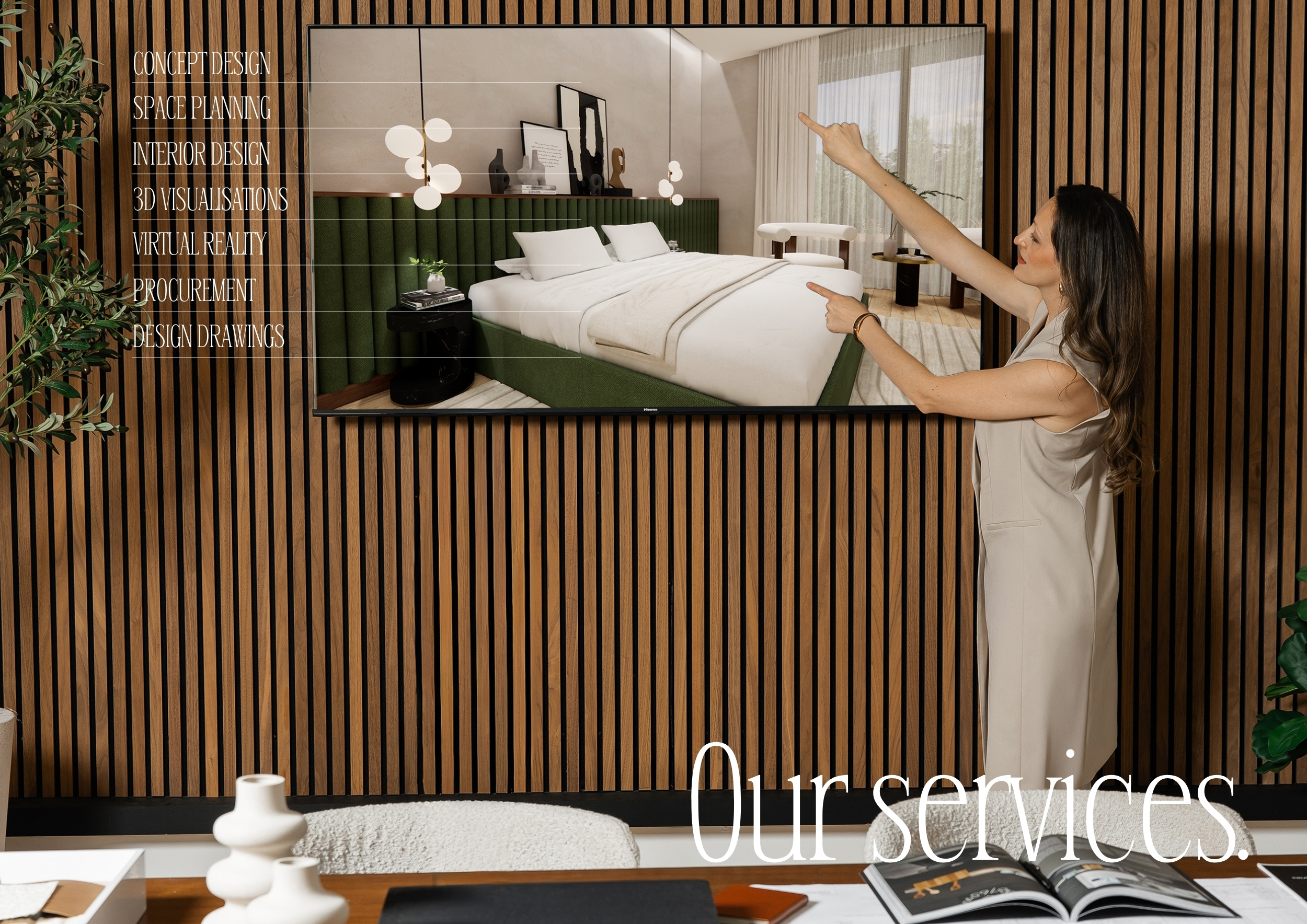
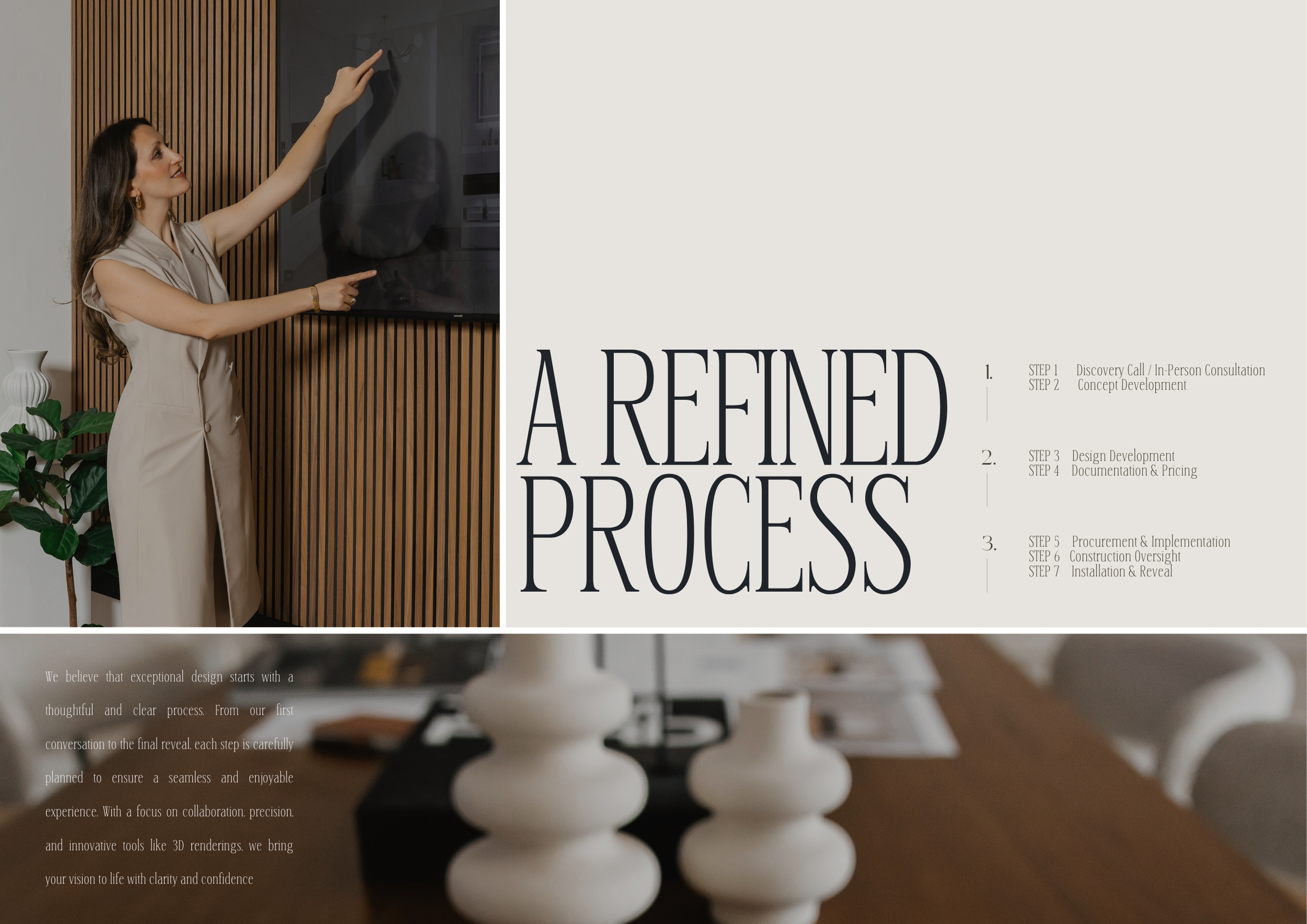
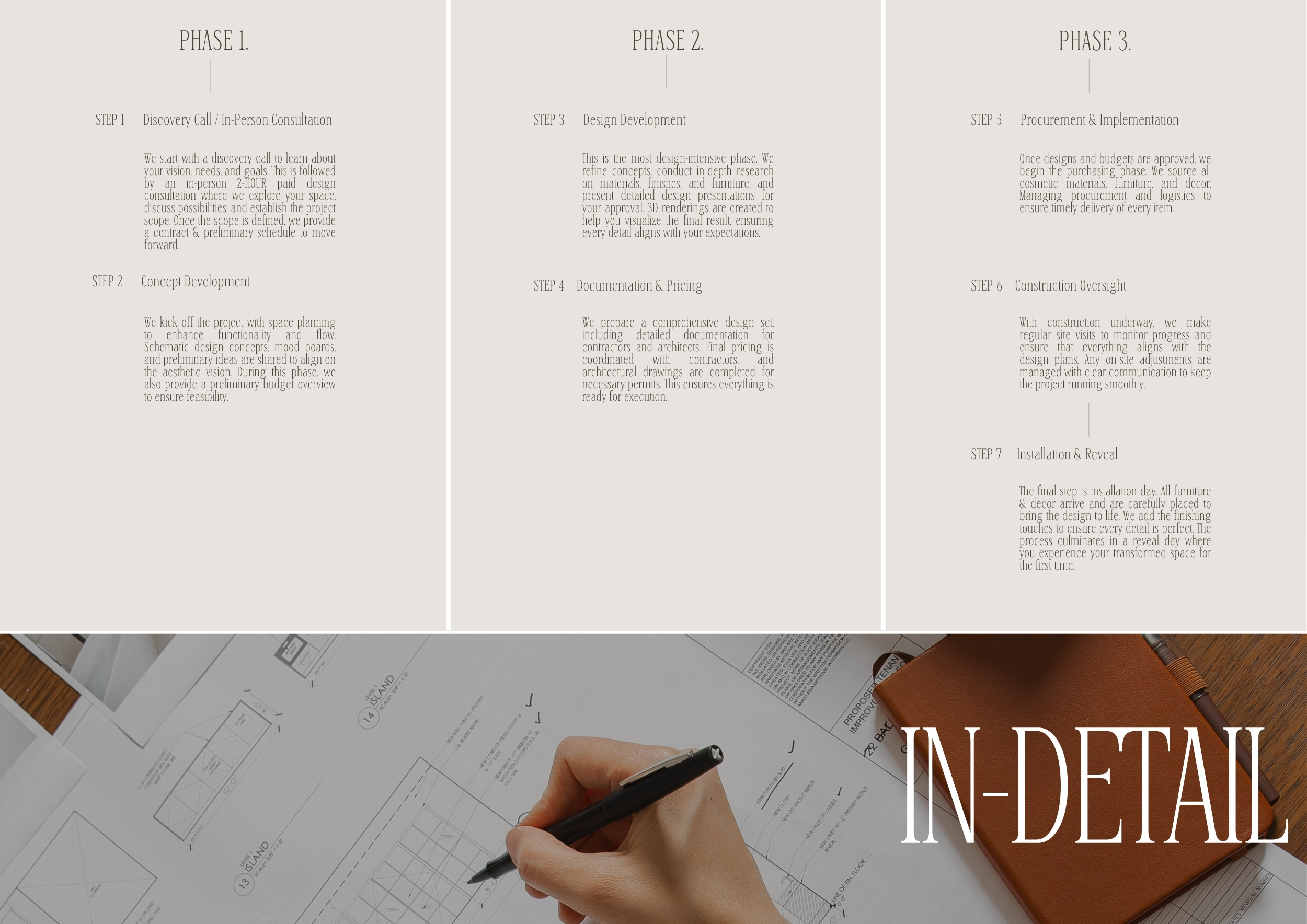
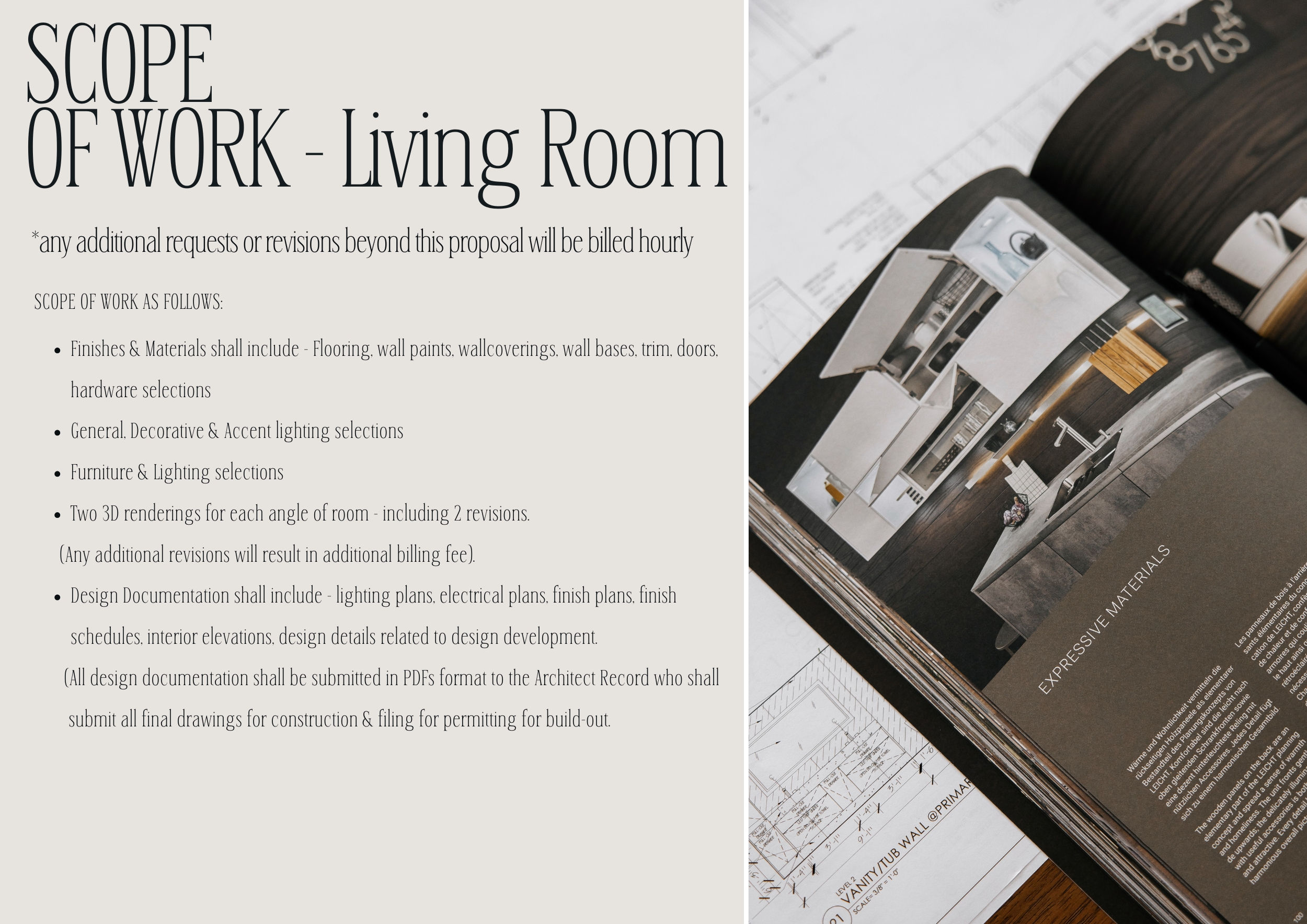
Then I include very detailed Scope of Work pages, because my design fees only cover the areas outlined in the proposal. Any additional spaces added beyond the original scope are priced as “Additional Services.” Full-service design should not be confused with all-inclusive services.
*Each room requires a different level of design thinking, documentation, and time — which is why scopes and fees vary by space
Next, I'll include break down of the services and design fee per square footage. Sometimes I break down my fee per phases but usually when I charge per square footage I simply provide a number associated with the square footage of the project:
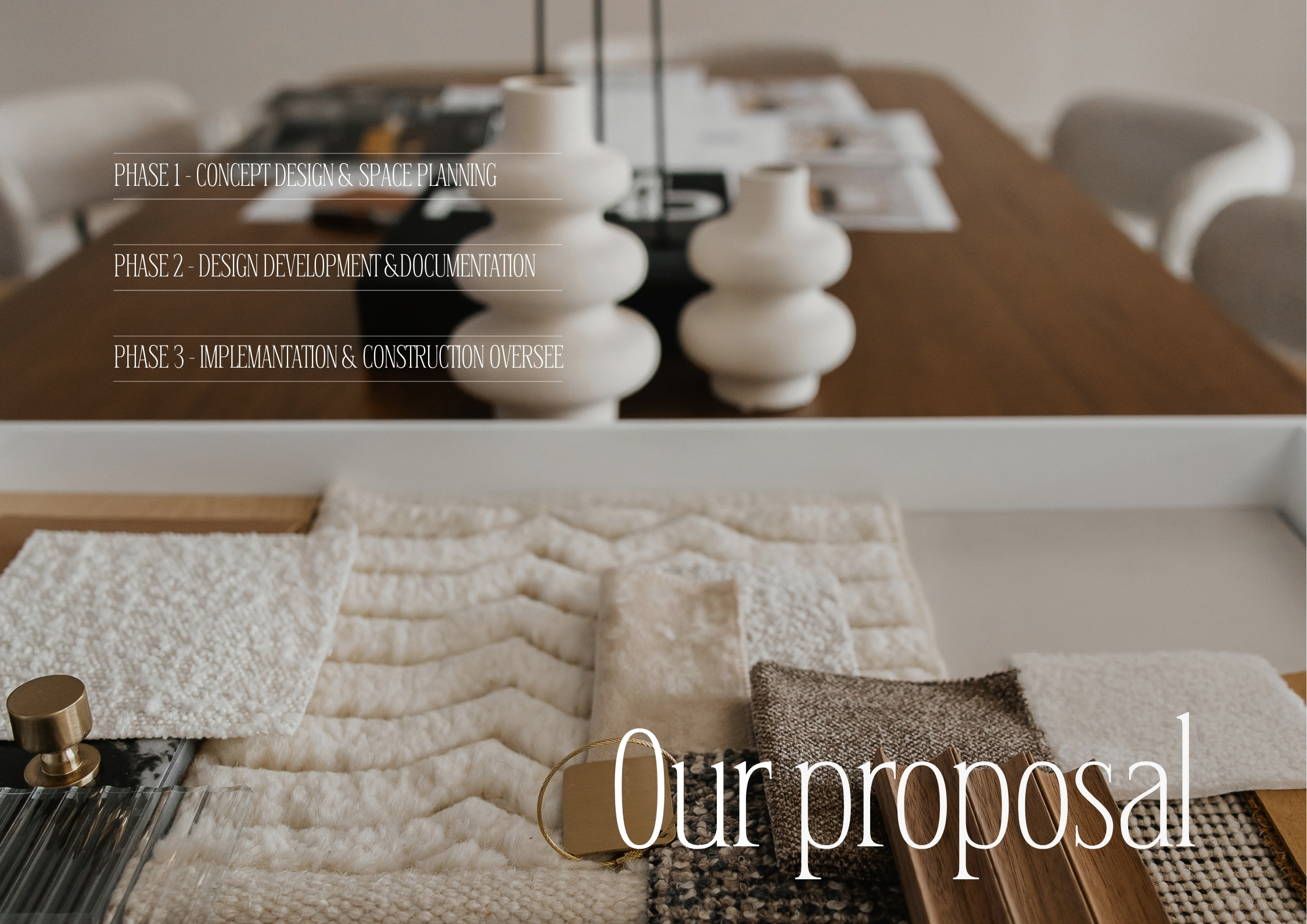
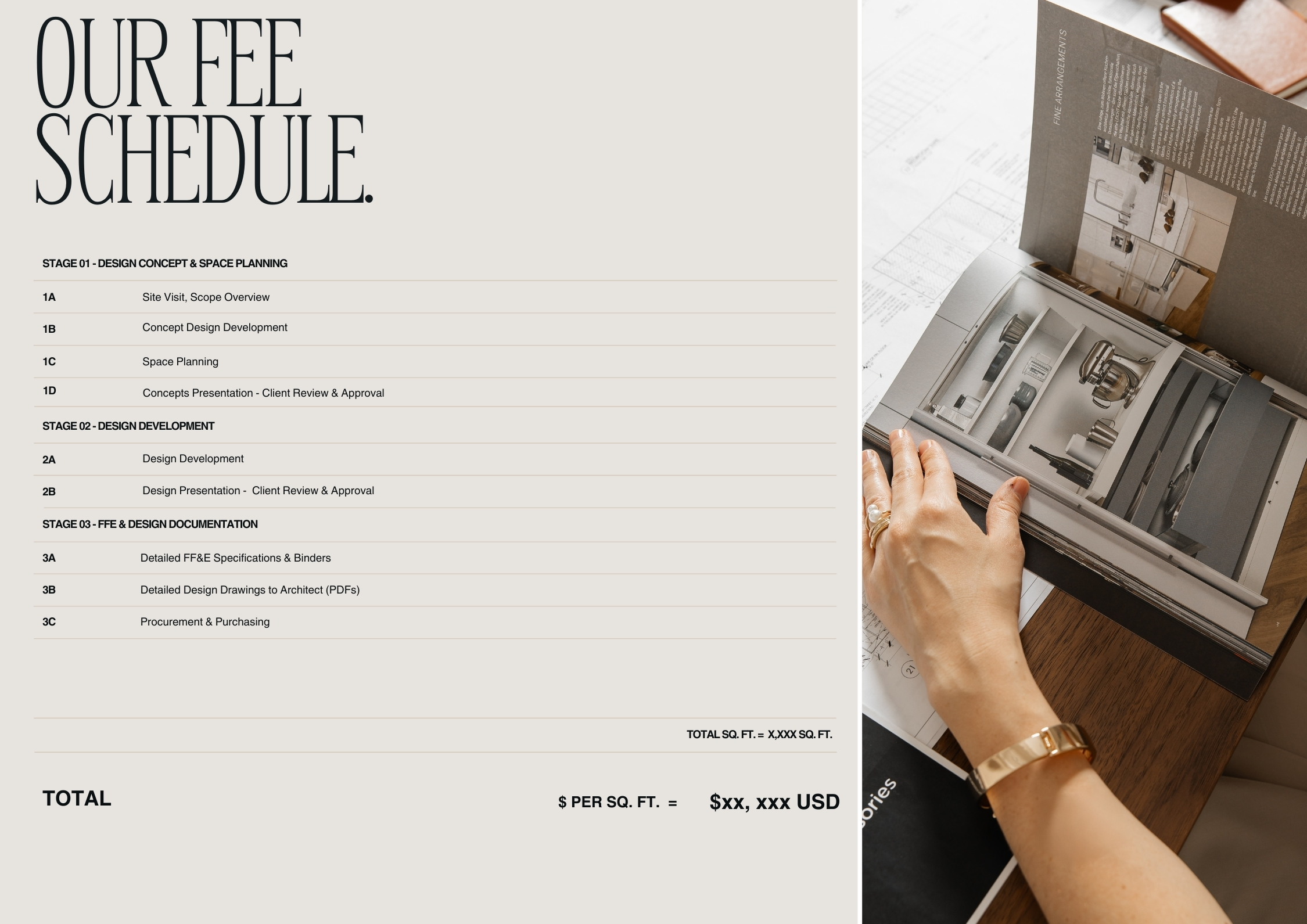
After I share design fees, I always outline a proposed project schedule - typically allowing 2–4 weeks for Schematic Design and 8–12 weeks for Design Development. Clear timelines help set expectations and keep the process moving smoothly.
From there, I walk clients through payment milestones and next steps privately within the proposal so everyone is aligned before work begins.
Lastly, I include detailed Terms & Conditions that summarize the scope, responsibilities, and structure of the project. Phew!
If everything looks good, we sign off on the final page - recapping all fees - and I send the agreement via DocuSign to officially kick things off.
Design Fees Aren’t the Only Way Designers Make Money
This is an important part of the conversation - because it’s often misunderstood.
Design fees are not the only way designers generate income.
And they shouldn’t be.
Full-service interior design includes far more than drawings and selections:
-
sourcing
-
ordering
-
tracking
-
coordinating vendors
-
problem-solving
-
handling delays, damages, and replacements
-
managing logistics from start to finish
That work deserves to be compensated separately.
Why Markups Matter
Beyond design fees, one of the biggest revenue drivers in my business is product markup.
I apply a 35% markup on furnishings, finishes, and products - not as a bonus, but as payment for the time, liability, and expertise involved in managing those items.
Markup covers:
-
product sourcing and specification
-
vendor coordination
-
ordering and tracking
-
handling issues when things go wrong
-
receiving, storage, and installation coordination
Without markup, designers are essentially doing procurement work for free - and that’s not sustainable.
Why I Created Furnish & Flourish
This is exactly why I created Furnish & Flourish.
I saw so many talented designers:
-
afraid to charge markup
-
unsure how much to charge
-
confused about trade pricing
-
or leaving tens of thousands of dollars on the table
Furnish & Flourish offers:
-
Access to 150+ trade-only vendors
-
A clear, ethical markup framework
-
And 6 educational lessons that teach you how to actually work with markup in your business
Not just what to charge - but how to implement it, communicate it confidently, and include it properly in proposals.
When designers understand markup, everything changes.
A Reminder Before You Compare Yourself
You might look at my numbers and think:
-
“That feels high.”
-
“That feels low.”
-
“I’m not there yet.”
All of that is okay. We are all on different timelines and journeys.
What matters most is that your pricing:
-
Supports your business
-
Reflects your responsibility
-
Allows you to do your best work without burning out
I now generate double - sometimes triple - on a single project what I once made in an entire year working in corporate, where I was exhausted and underpaid.
Building this business has been the biggest improvement I’ve ever made for myself.
I’m beyond grateful for these fees.
And even more grateful for the clients who value the level of work I provide.
Lastly, feel free to join my Free Webinar where I explain more my pricing systems. In this free 30-minute masterclass, I’ll show you the exact pricing models, markup math, and trade vendor system that turned my design studio profitable - without working harder!
If you’d like a peek behind the scenes of my design process - from digital tools to business insights and heartfelt reflections like this one - join my newsletter!
Join the newsletter →
If you have any questions, feel free to email me any time - [email protected]
Love,
Ana 🌸
