
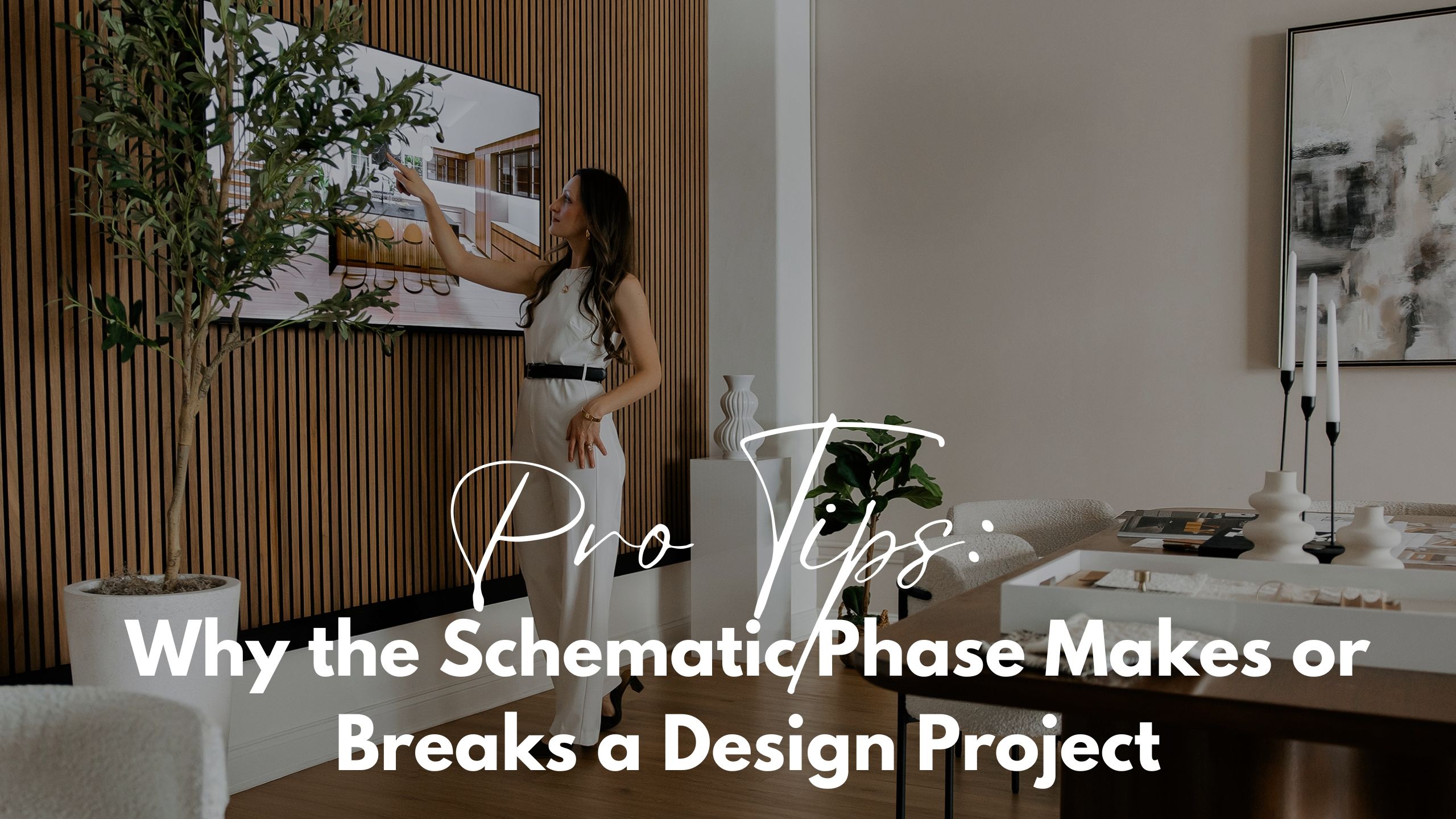
Why the Schematic Phase Makes or Breaks a Design Project
Jan 09, 2026A look inside my process — and why this week’s schematic presentation reminded me why I’ll never skip this phase.
This week, I presented the schematic design for one of my current full-home renovation projects — and it went so well.
It’s always such a rewarding moment: seeing clients’ eyes light up when they realize their home is starting to take shape — not through finalized renderings yet, but through the big picture vision that’s finally coming to life.
And honestly, it’s that moment that reminds me why the schematic phase is absolutely essential. It’s where everything starts to click — both for me as a designer and for the clients who are trusting me to bring their dream home to life.
What the Schematic Phase Really Is
If you’ve ever wondered what happens after the onboarding call but before all the 3d, detailed drawings and sourcing begin… that’s the schematic design phase.
It’s where I take everything I’ve learned during the onboarding process and client questionnaire, and translate it into visual direction, layouts, and early spatial planning.
The goal?
To make sure we’re 100% aligned on the look, feel, and functionality before diving into the design development stage — where every decision becomes more detailed and permanent.
What’s Included in My Schematic Presentations
Every schematic presentation is unique to the project, but they typically include:
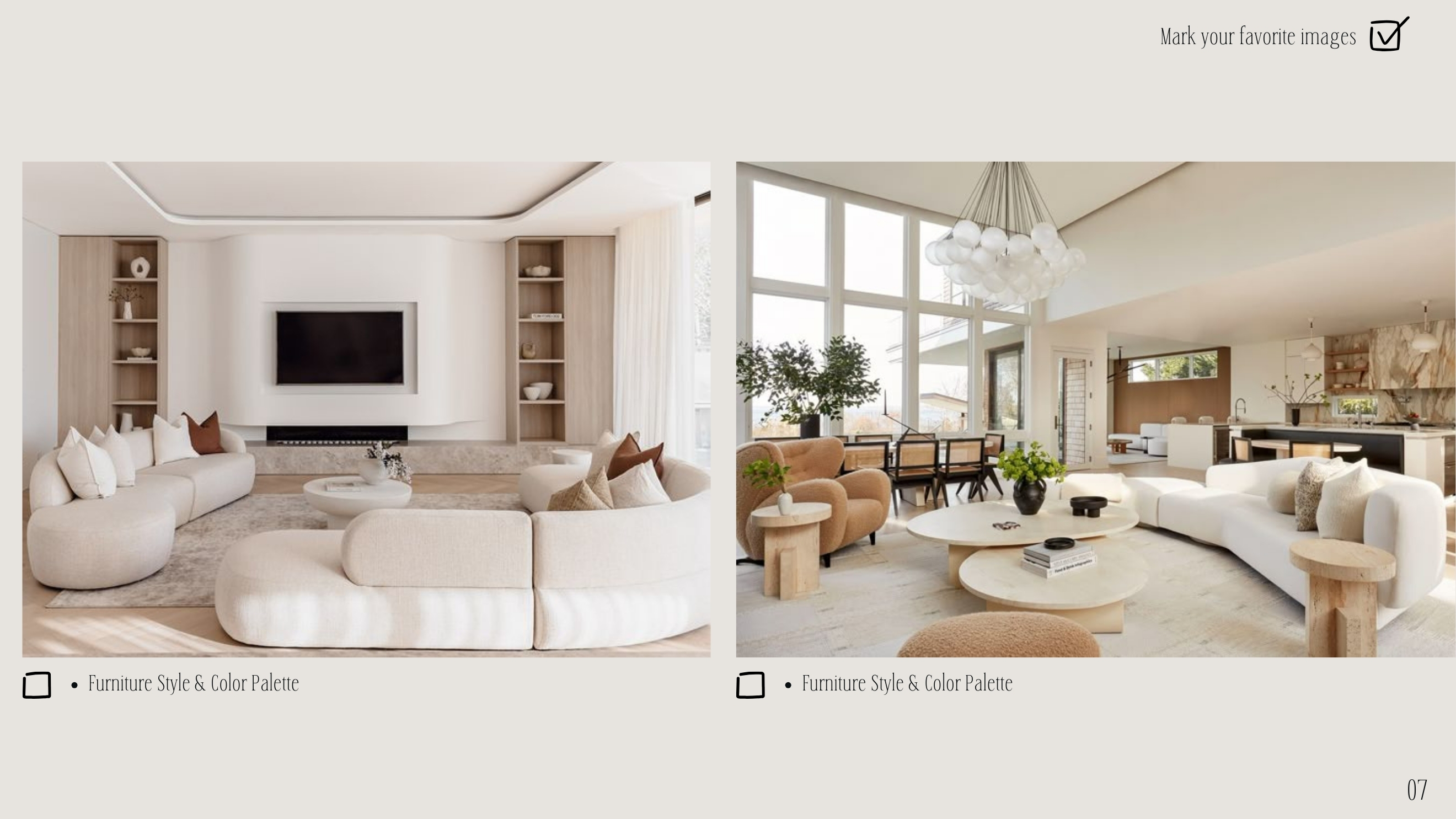
🖼️ Aesthetic direction boards — lots of imagery to understand the client’s visual language and preferences. I include 2–4 key directions for each room (like you can see in the slides below), so clients can easily mark their favorites and share feedback visually.
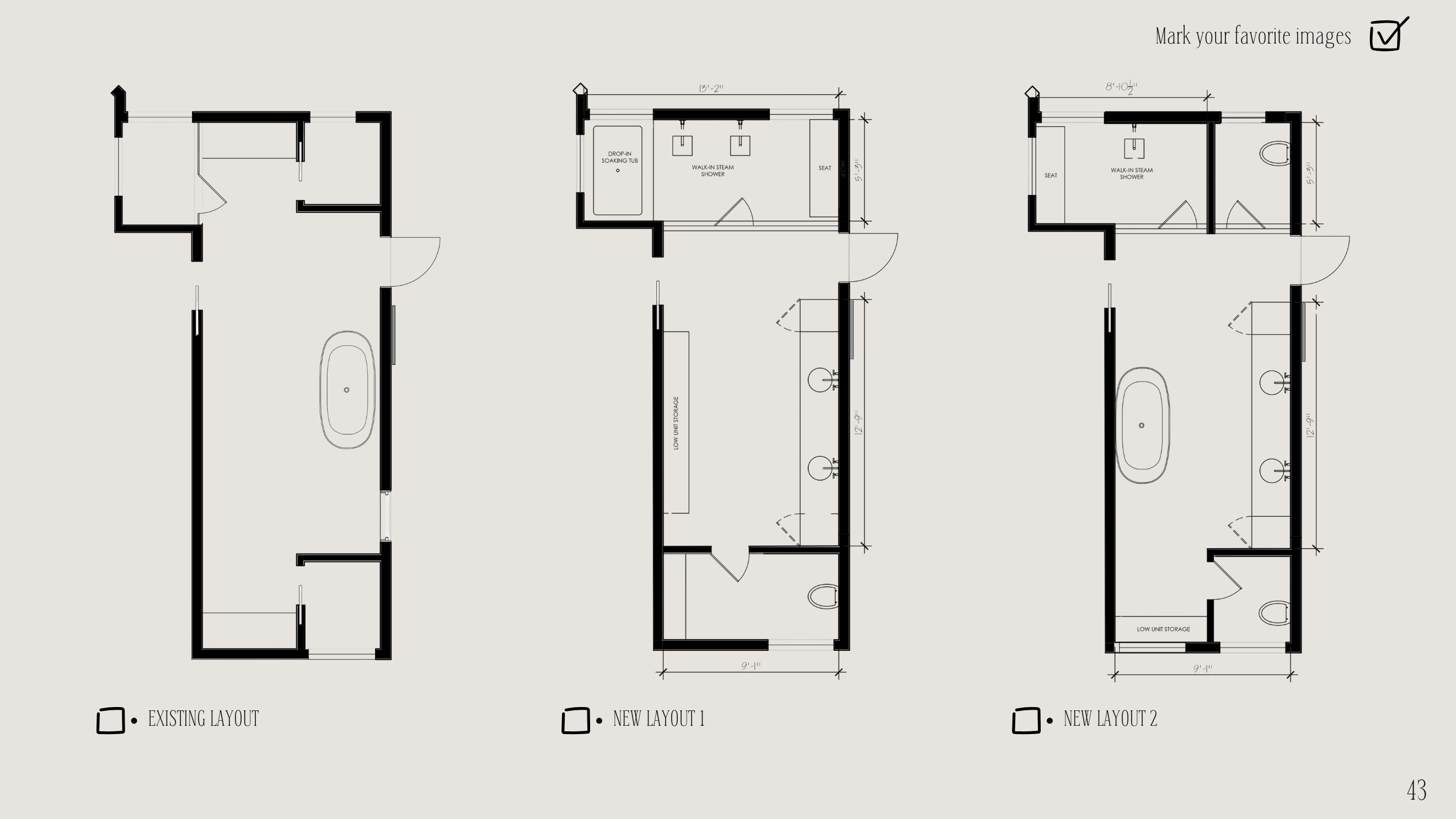
📐 Space planning and layout options — especially for complex areas like kitchens, bathrooms, and primary suites. These early layouts let us explore the best possible functionality before selecting finishes or specifying furniture.
💬 Project briefs by space — simple, clear notes outlining goals for each room (e.g., “formal and conversation-focused living room” or “calm, minimal suite for a teenage daughter”). These serve as the design compass once we move into development.
When clients see all of this pulled together, they finally understand how much thinking happens before a single piece of furniture is sourced or a wall color is chosen.
Here are a few pages pulled from my Schematic Design Presentation as example:
The Cover Page, a pro tip - always include Address of the project & Family Name!
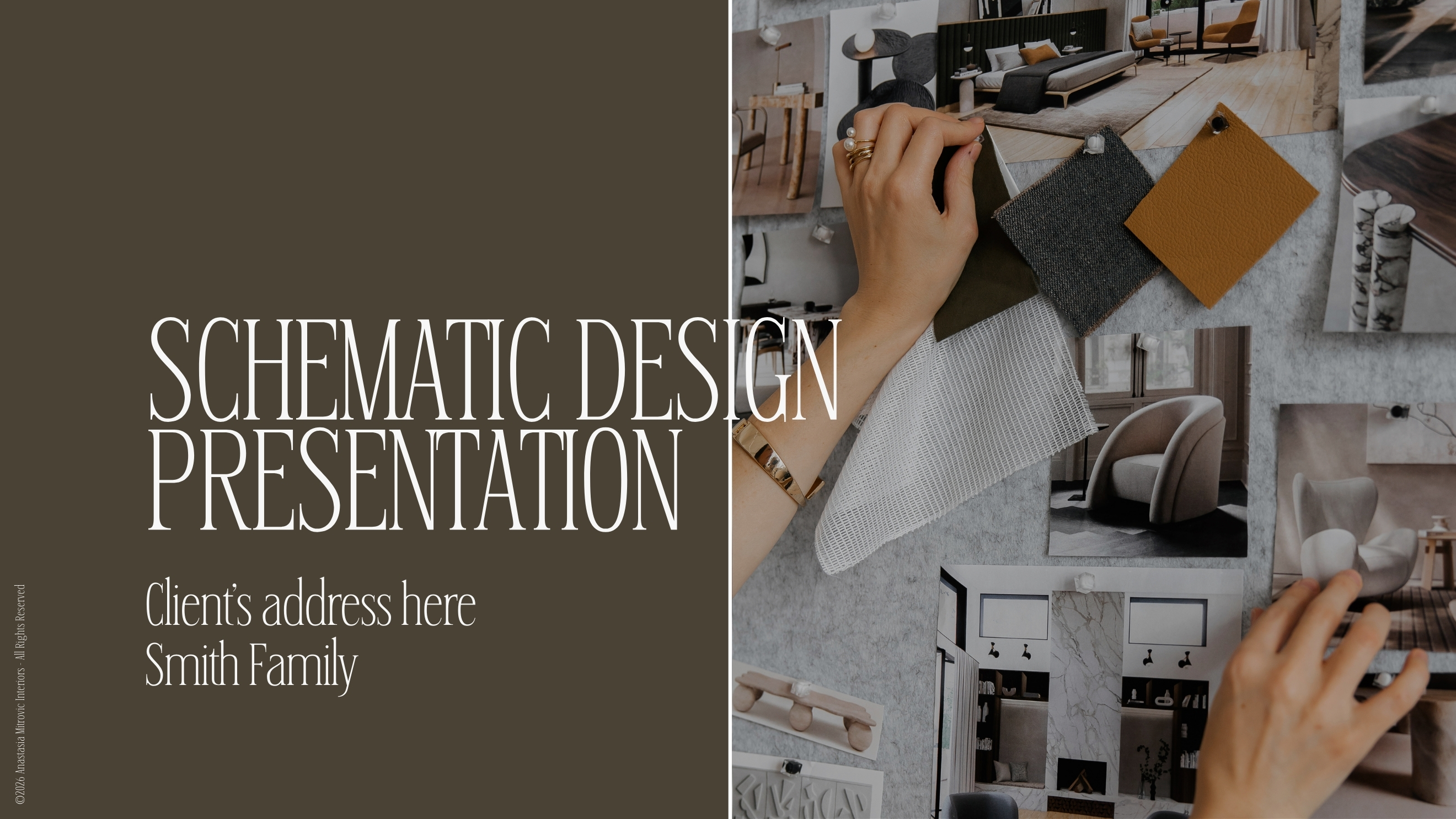
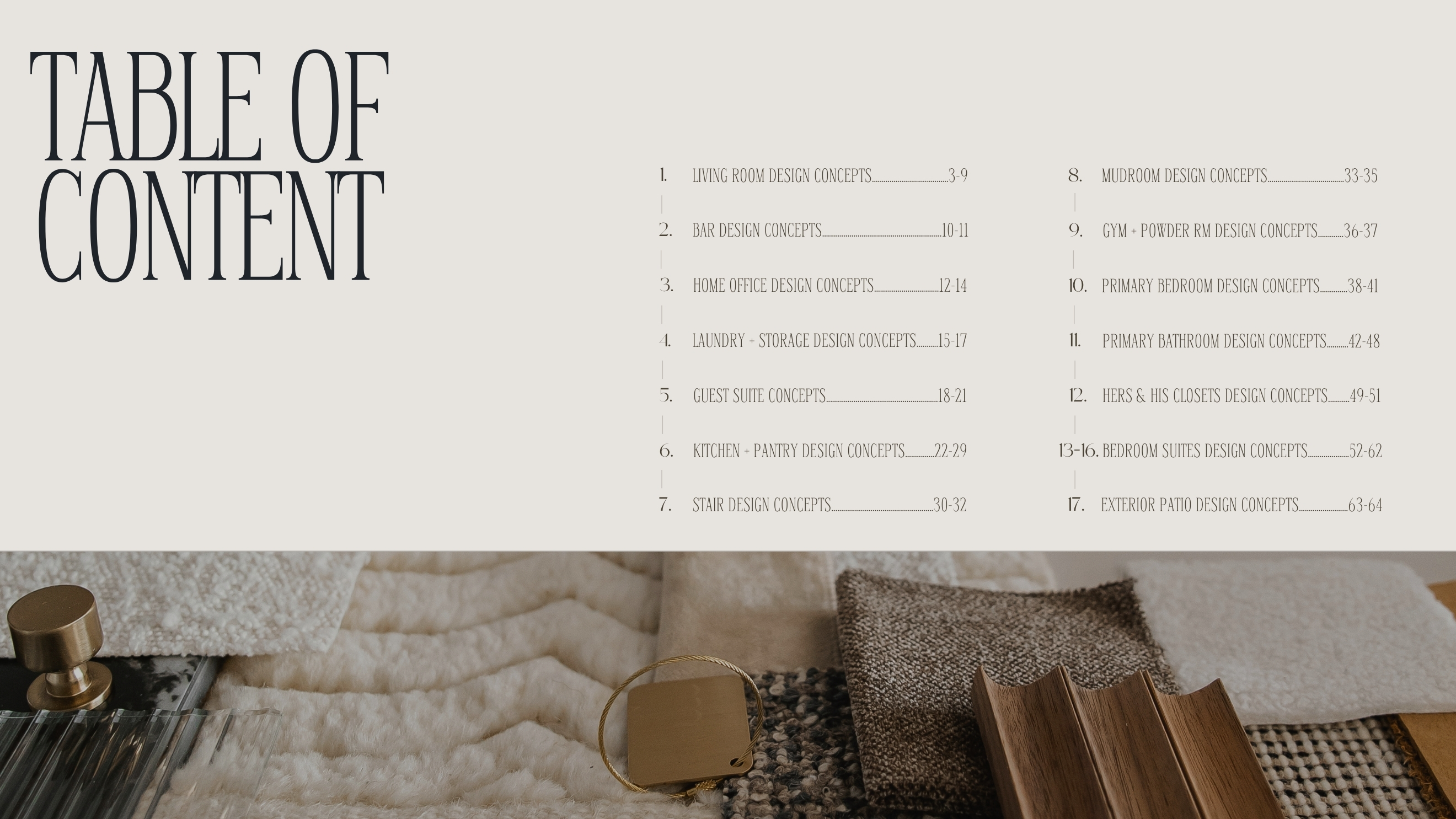
Table of Content, if you're working with a full home renovation, it's super helpful to break down each space and list page numbers:
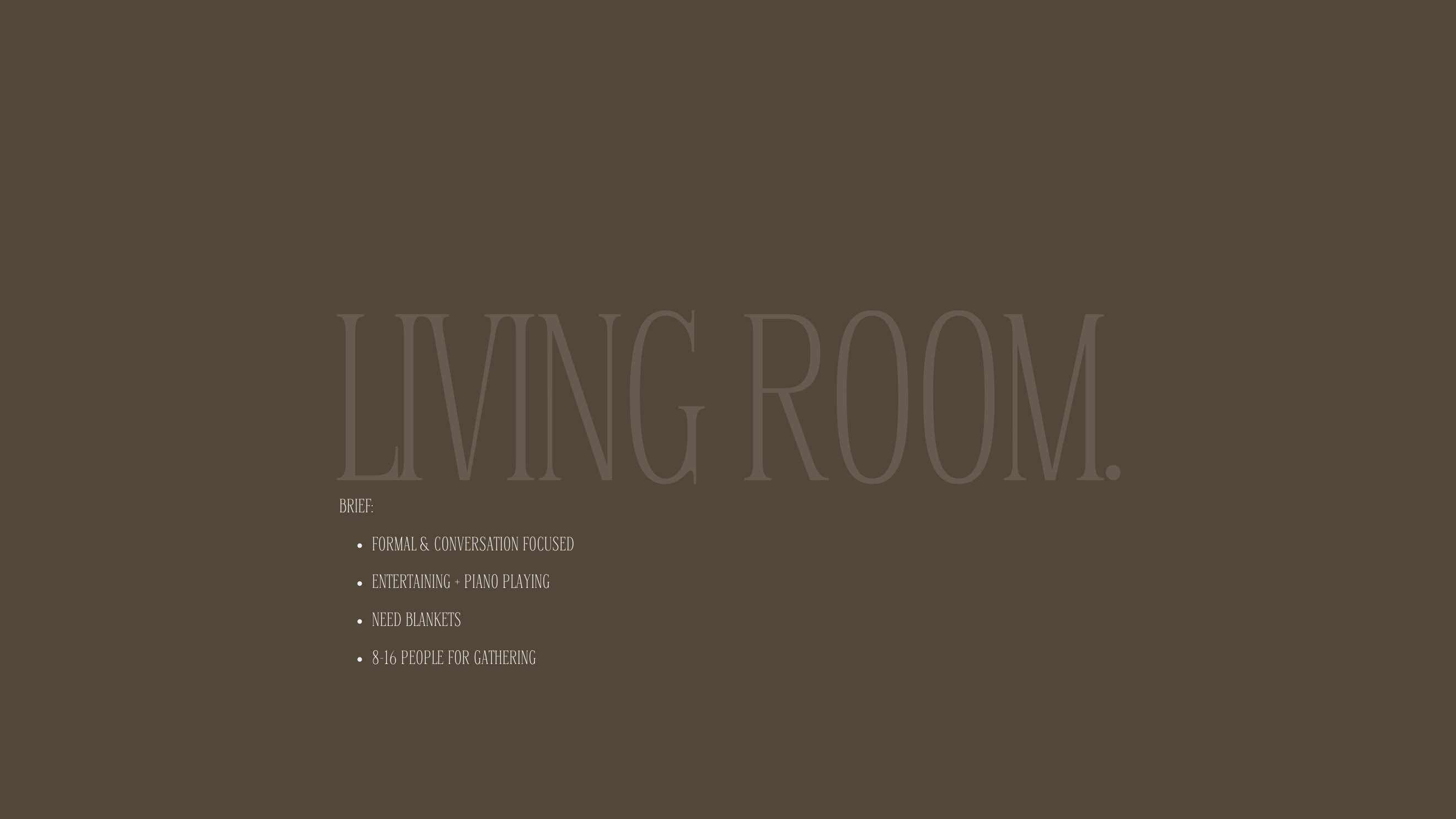
Name of Area, always add a break page with name of area and a brief from the questionnaire, this tells the client you have thoroughly reviewed their questionnaire in detail:
I love to add check-mark boxes next to imagery, it's much easier to keep the track of what they liked vs. what they didn't as we go through presentation:
Add preliminary space planning to areas that need better function, my goal is always to have signed off space planning before proceeding into Design Development Phase, although sometimes we can still tweak some areas during DD.
A Pro Tip - I love including the existing space layout which helps to explain why it doesn't work and what I'm proposing in a new layout during presentation:
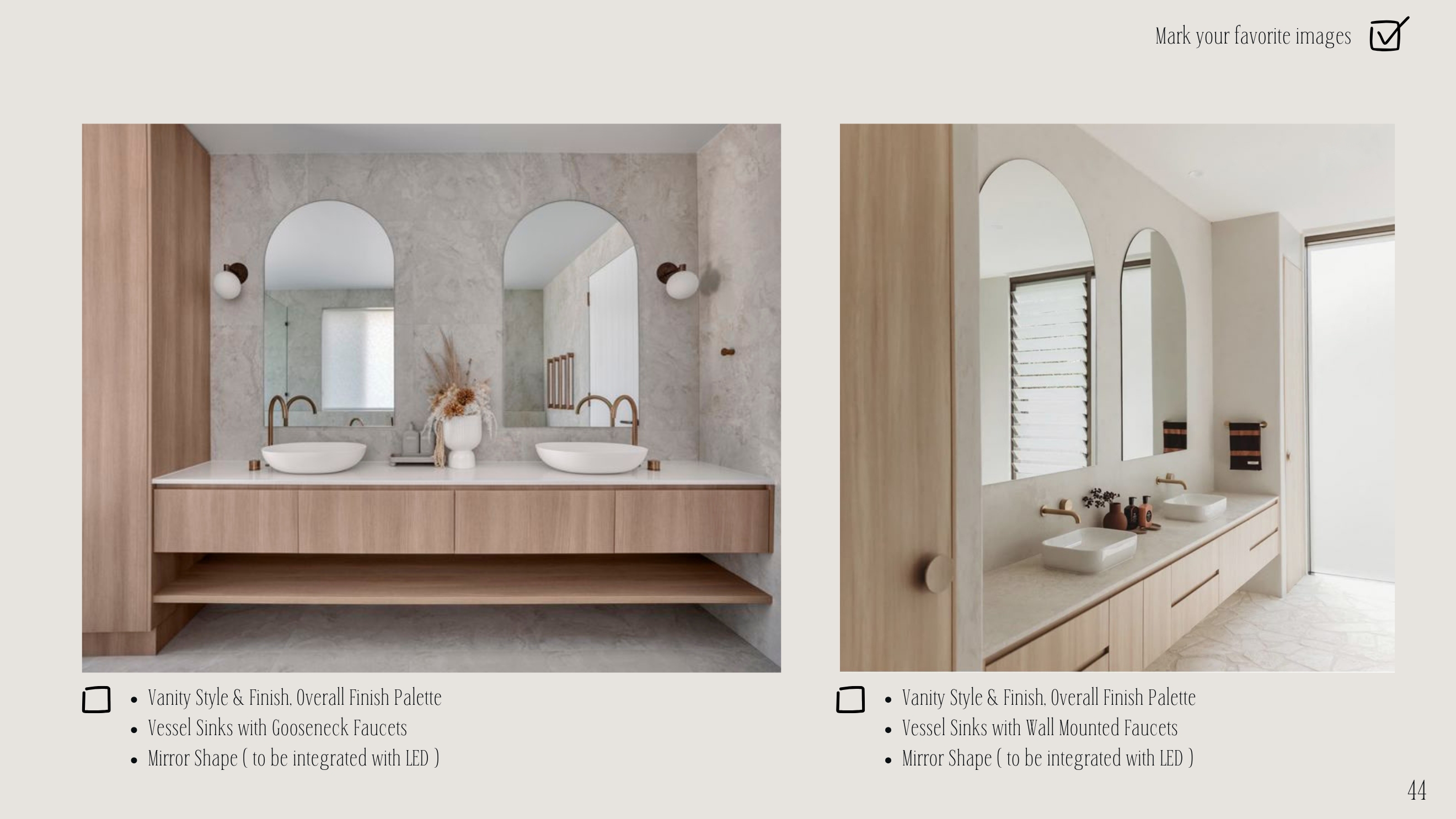
I love supporting space planning with imagery so they can understand what I have in mind and what I'm proposing for their new home:
Why the Schematic Phase Is So Powerful
There’s a magic in this stage — it’s where creativity meets clarity.
By aligning on layout and mood early, I can move into the design development phase with confidence that the foundation is solid.
It saves time, prevents revisions later, and builds client trust because they’ve seen and approved the vision at every step.
A Little Gift for My Fellow Designers
Because I know how much easier it is to nail your schematic phase when your onboarding foundation is strong, I’m sharing something special this week:
My Full-Home Client Questionnaire Template — free for you to download!
This is the exact form I use to gather all the crucial information before starting schematic design. It covers lifestyle habits, spatial needs, and aesthetic preferences — everything that sets you up for success long before the first layout is drawn.
→ Get My Free Client Questionnaire
Use it as-is or customize it for your own process. Trust me — it will make your schematic phase (and client communication) so much smoother.
Closing Thoughts
Every beautiful, functional space starts with a well-thought-out schematic.
It’s the bridge between vision and execution — and when done right, it makes design development a joy rather than a guessing game.
So if you’ve been tempted to rush ahead to finishes and renders, take a breath, slow down, and spend the time here. Your clients (and your sanity) will thank you later.
Wishing you clarity, confidence, and beautifully aligned projects!
If you’d like a peek behind the scenes of my design process - from digital tools to business insights and heartfelt reflections like this one - join my newsletter!
Join the newsletter →
If you have any questions, feel free to email me any time - [email protected]
Love,
Ana 🌸
